
Over the last three months, I've shipped three working products.
A WhatsApp outreach tool with a CRM and mobile mode. CallCoach — an iOS app that transcribes speech in real time and suggests responses during a live call. And a third service currently in development is our family app for children, designed to help children with remote learning and schoolwork.
I have no formal programming background. I'm a product designer — I understand systems, think in scenarios, know how a product should work. But until recently, there was a developer standing between "I know what's needed" and "this actually works."
Now it's Claude Code and ChatGPT Codex.
What changed
Before: idea → brief → developer → iterations with translation loss.
Now: idea → dialogue with the tool. I describe the task — in detail, with logic, with edge cases. The tool writes the code. I run it, see what's off, explain, iterate.
No translation loss. Because I'm the one in the dialogue.
I haven't become a developer. I still don't know syntax by heart and I can't read someone else's code like a book. But I know what I want to get — and I can explain it precisely enough to get a working result.
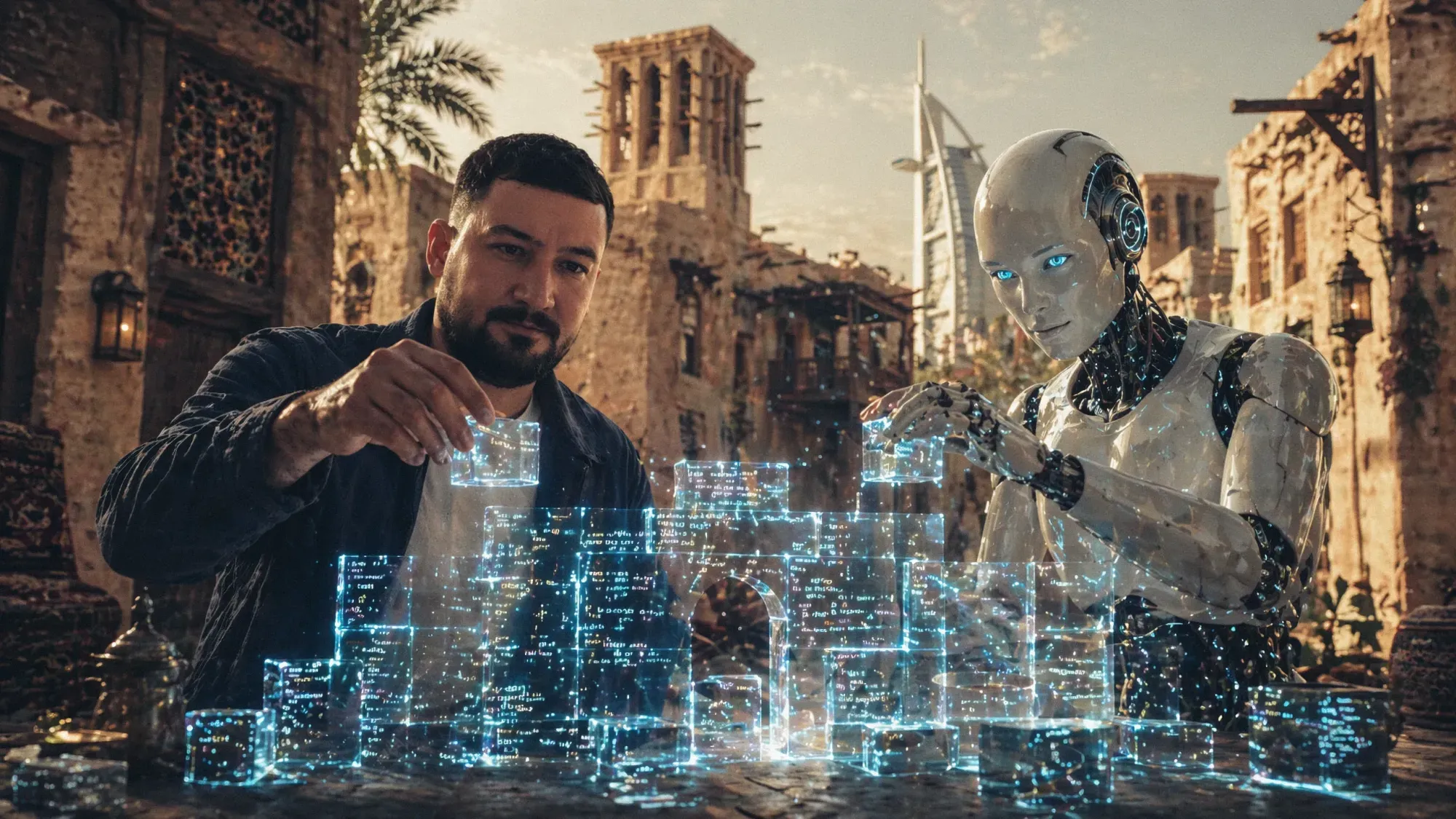
Who's the creator now
When the machine writes the code and the human sets the task, checks the logic, decides what matters, and is responsible for the product doing the right thing — who's the creator?
I think the boundary is shifting. A creator used to be someone who could make things with their hands. Now it's someone who can think. Ask the right questions. Hold context. Understand why something needs to exist.
Technical skill is no longer the entry ticket. Something else is. I'll call it product thinking — the ability to see a system whole, understand the user, make decisions under uncertainty.
What this means for designers
Design has always been about understanding human experience. How people think, what they need, where friction appears.
Now a designer with that understanding can build not just interfaces — but entire products. Fast, cheaply, alone.
This changes the profession. Doesn't eliminate it — changes it. A designer who knows how to work with machine intelligence tools becomes something more than a designer. And something different from a developer.
There's no word for it yet. But the people exist.
I'm one of them. Figuring out what it means — right now, in practice, with working products and real users.


Discussion